| Unionite: There’s an old saying that the only constant
is change. Over the past decade that has certainly been true of the U.S. stock market.
Although we are hitting record highs, the volatility has been astounding. Even the
so-called "investment experts" seem to have a tough time predicting what is
going to happen. Why is that the case? Why are the markets acting the way they have in the
recent years? Newell: Kenny is our resident expert. Before he came to Union’s faculty he was a stock broker. Holt: Let's put it this way: if I had known how the markets were going to go, I might still be a stock broker! As far as the volatility is concerned, there are many more signals that you have to deal with today than you had to deal with in the past. They come much faster than they came before, and with computers we have increased ability to respond to these signals. Part of the volatility is nothing more than the fact that everything is happening at a faster and faster pace. A correction that might have taken six months to two years in the past, these days can be completed in a week. And the amount of volume (number of shares being sold) is enormous. In general terms, markets move a lot faster than they would in the past. That causes things to move up and down much more rapidly. Padelford: There is also a lot more interest in global investing now than there was fifteen to twenty years ago. Of course mutual funds exist that are geared toward global investments in other countries. In terms of volatility, things that are happening in other countries — like the four "Asian tigers" or Brazil — have always affected us some. But international trade is becoming a bigger percentage of what we do in terms of our own national production. So international trading relations are making a bigger bang in our own economy. So if Brazil’s economy crumbles we may be going fine here but we're going to feel it; we are going to see repercussions from that. So it is not just our own domestic policy that we are looking at in terms of stability now. What other countries are doing is having more of an impact on our own economic health in the United States. Newell: If we knew for certain that the stock market was going to be straight up or almost straight up, then it wouldn't be too much of a risk for us as individual investors to go out and assemble our own portfolio of selective stocks and bonds or whatever. But of course we don't know this. So obviously lots of investors and groups have moved from assembling their own portfolio to buying into a portfolio that is already assembled, called a mutual fund. And the market has moved dramatically in that direction. Now we see a lot of activity in index mutual funds, based on the assumption that you really can't out perform the market over any extended period of time. The best we can hope for is to do as well as the market does. And so you buy into some index funds and broad-based funds and sit back and relax. There is a conviction which I deeply have — I trust we all have — that the American economy is strong and will continue to be strong. Yes there will be bumps along the way which we basically cannot predict with certainty. But the underlying strength is there, will continue to be there. This is not a faith issue — I reserve that word for something else — but we have confidence in the strength of our economic system, so we want to buy into it. Holt: As large as some of mutual funds are these days, the mutual fund is, by definition, the market.That big, they can't outdo what the market does. They can't outperform it. They do what the market does. Newell: Stacy Montgomery is one of our graduates of several years ago. He works for Paine-Webber as a stockbroker. He came to one my classes recently and after class I asked him, "Stacy, what do you do on a day-by-day basis. How many people call you on the phone wanting to trade their individual stocks and bonds?" He said that basically that doesn't happen anymore. People are in mutual funds, not in individual stocks and bonds. Obviously some are, but the ones who are tend to trade directly and bypass the established broker. Stacy said, "My business today is overwhelmingly dealing with people who have been in management, and they lose their job or retire from their job. They have accumulated a substantial amount of money in some tax advantaged plan and they want to roll that over or reinvest it elsewhere." This is where they come to him for advice. That's what he is doing as a stockbroker. I suspect that is quite different from what you did, Kenny. Holt: Actually that had already begun when I was there. Just the cold harsh reality of it was, if you came to me with $10,000 to invest and we bought an individual stock, in buying that stock, I might make a hundred bucks in commission. If we bought bonds, I might make fifty bucks. But if you bought a mutual fund, I'd make anywhere from four to eight hundred dollars in commissions paid by the mutual funds. The funds are trying to get you to push their funds. Even the funds that have a low load pay a very nice commission. The reason investors work that way is the fact that you cannot diversify a portfolio and play the market anymore like you did at one point. The markets are so institutionalized and controlled by computers that if you are not in with a fund manager that has the ability to move things very quickly, then you will be the last one to get in and the last one to get out. And you will wind up doing just the opposite of what you hope — you will wind up buying high and selling low, even though you may have put your order in when it was low and tried to sell it when it was high. Padelford: Why would a person pay commission on mutual funds when you can subscribe pretty easily by mail and get into a lot of mutual funds? Holt: Even when you apply by mail you still pay a commission. The difference is the fund keeps the commission. Even the low load funds. Even the low-loads and the no-loads have charges. The only difference is with the no-load fund you may pay marketing fees or annual management fees in the neighborhood of 1½ to 2%, where in the loaded fund you may only paying 25 or 50 basis points (¼% or ½%) a year. I used to tell my customers United Way does not offer mutual funds so there is no such thing as a free ride. You'll be paying it somewhere. You're paying for that professional management. |
||
|
||
| Unionite: How has technology impacted the way the markets
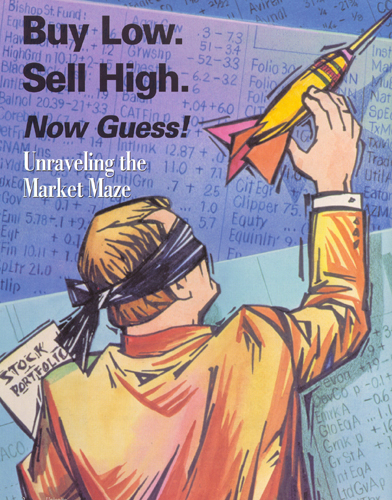
work? Padelford: In economics we talk about comparative advantage — what the country does best. In our country what we do best are agriculture and technological advance — the rate of research and development. If the U.S. economy is growing at about 3 percent per year, probably a percent or a percent and half of that growth would be technological advance. Newell: That may be an understatement. Padelford: Maybe more. And so we are totally committed to technological advance. We 're on a train that is real hard to get off of and that makes an economy like ours very dynamic, no doubt — new products are being developed all the time. And of course technology has its own spin in terms of operation in the stock market. That whole market has changed. It is very technologically advanced, online buying and selling, day trading and so forth. Buying by computer now. Technology has made that more possible. Newell: The illusion still lingers, I think, that somehow — as an individual investor who may live in Jackson, Tennessee or wherever — some think they can gain information about a certain company that nobody else knows about. Information the market hadn't picked up on yet. I can do this because I have information that nobody else has, so I can choose smarter than they can and I can outperform the market. Well, that is nostalgia. It is especially nostalgia in today's investing environment, when essentially what we are talking about is markets that are instantaneously efficient. You are not going to beat the market — if there is a rumor or there's a fact, the market already knows about it. You can't beat it there. Padelford: That's why what is called the "random walk" theory is so popular. There have been experiments that have been done where a person invested in a hypothetical portfolio and made those decisions by throwing darts at a copy of The Wall Street Journal. That kind of dart-throwing decision making usually performs better than a reasoned approach. Through rational information processing and rational analysis, the most one can usually hope to do is to perform at the market rate of growth. To do better than that you have to do something almost irrational, like throwing darts at a copy of The Wall Street Journal. Holt: Talking about technology . .. You can approach that from a number of fronts as far as computer trading. You can set your computer to automatically buy and sell at certain levels, you can buy and sell the index, you can buy and sell futures, you can hedge your portfolios. Those kinds of things kick in automatically and are what causes the market to instantaneously adjust, instead of people having to think through and over a period of time gradually make the adjustment. The adjustments are made without anybody doing anything anymore. You program it into a computer. If you look at the markets themselves, you know Nasdaq used to be all based on telephone calls. If you wanted to buy an over-the-counter stock, you would have to call a broker dealer who made a market in that stock. When I was in the brokerage business, if you called me to buy an over-the-counter stock, I would have to either get on the phone myself or get one of my traders to get on the phone and call the broker dealer and find out what the Bid and the Ask was at the moment. Then you would transact your order. As that was becoming more computerized, the broker-dealers would put their prices out there on the computer so you could see it but you still had to call and confirm it. Now all that is computerized so you just enter the order and the broker-dealer will pick up on it. Wall Street is automated to the point where if you send the order to your broker — if you call Stacy and want to buy two thousand shares of stock — that goes into the automatic order entry system and the specialist never even sees that order anymore. That just goes straight in. Then you get into these issues where the day traders are coming in, and 24-hour trading will be here very shortly. Technology has changed the way the markets operate entirely. I got out of the brokerage business in 1988. When the markets crashed in '87, I believe 500 million shares was the amount that traded on that Monday; on the Friday before that we traded a little over 200 million shares. In those days, the average volume was around 100 million shares a day for the New York Stock Exchange. About 100 million shares a day, even in the late eighties. In fact, the weekend before the market started going down on Thursday and Friday and it crashed on Monday, that weekend the New York Stock Exchange tested a system to see if they could handle 400 million share trading days, and Monday they had a 500 million share trading day, which was just unheard of. It jammed the system so bad that when you entered orders on that Monday, it was taking you two, three, sometimes four days to get confirmation back. Whereas on that Friday, when I entered an order on my computer screen, I normally got my confirmation back within ninety seconds. So you have customers that are normally being told on the phone your order went through and this is the price; now they are having to wait three or four days to find out what happened. Now, a 700 million share volume day is normal. So what you see is the turnover of the stocks is much, much faster than it was before. Just before the markets crashed in 1929, the turnover was 100 percent. All the shares were bought and sold in the course of the year. Last year the turnover was 72 percent, which is the highest recorded since the markets crashed. That doesn't mean the markets are going to crash; it just means that with day trading and night trading and all the computers going around, you are just trading a whole lot more volume, and you can do it because of technology. There are drops in the market that are still occurring. There are corrections that happen. They just happen so fast no one even notices it sometimes. Newell: A Personal Financial Management class is now required of all of our business majors. Investing is certainly a major element of that class. I tend to approach it more from a point of view of why do you make wise investments for your retirement. I put a lot of emphasis on retirement. Of course, students don't want to think about retirement! But this is the best time to make decisions about your retirement. You can't wait till age 31 or 41 or 51; you'll miss a great opportunity if you wait that long. But my experience is that when you introduce the idea of investing to students who don't know much about it, they think first about building their own portfolio. That's their mind set. Building their own portfolio rather than mutual funds. Although several of them own mutual funds even at age 20, 18, they own their own mutual funds. But the idea of an index fund is generally something they have not heard of. I try to resist. I don't think I am there to give them advice on how to invest their money, into this stock or that stock or this mutual fund or that mutual fund. I really back off from that. But when it comes to advice on should you try for retirement purposes — longterm investments — as a strategy to build my own portfolio or to buy into a portfolio that has already been built, called a mutual fund, I think it's a no-brainer. It really is. Holt: Although everybody still dreams of buying Walmart at the ground floor. That's what everybody wants. That's why the very small-cap stocks in Nasdaq are very poplar. Newell: It is a lottery. It is a little more sociably acceptable. Holt: Where you do have individuals who insist on buying individual stocks, this is the way I tell them: "If you have to have individual stocks, if you don't want to do mutual funds, get your checkbook out. Look at your check register. Tell me where you write your checks. That is where you put your confidence in, that is where you should put stock in." Invariably around here they will say, Bell South, Kroger, Walmart. You should buy the old favorites that you know and that you love and use. Don't try for the high flyers. Just buy them, salt them away, reinvest the dividends. Don't watch the papers. Newell: The February 22 issue of Business Week magazine has a nice article on index funds. One of the statistics that sticks in my head is that over the last 15 to 16 years of the bull market, if you look at the performance of mutual funds and the performance of index funds, only about 5 percent of the mutual funds have out performed the index funds. What are the probabilities here? Where do we want to put our money? Do you think we are smart enough over the extended period of time to beat the market or are we going to be content with just doing as well as the market? Pretty powerful article. |
||
|
||
| Unionite: You mentioned this incredibly long bull market that we've had.
How much longer can this go on? Padelford: The current expansion we've been in since about 1992. Seven years is a long time. I'll tell you where economics is headed right now. This whole recession scenario has been driving macroeconomics for a long time. The whole study of recessions from the 1930's was based on the inventories cycles, where businesses have piled up a lot of inventories through falling consumer demand. It takes a certain amount of time to work those inventories down, so you slow your business down, and so forth, and you've got a recession. My take on it right now is we are living in a new kind of economy. I think it has to do with two things. One is just-in-time inventory, a management techniques that was really developed by an American but popularized in Japan. Businesses are able to maintain leaner inventories. If you have a lot of American businesses that maintain leaner inventories, then even if we do get into a recession, I think it is a possibility to work those inventories down much faster than we did in the 1950's. So my own belief is that we probably will have recessions but they'll be of a shorter time duration. I think another thing that has made for a new economy is the growth of international trade. American companies are having to compete with foreign countries on the same playing field. American companies are just not as free to raise prices as they were in the past. I think that's placed a lid on the kind of inflation rates that we are seeing, so that from 1992 to 1999 we're in a new time. It has been a low inflation economy. Maybe for many reasons it has been a very dynamic growth economy. This is the best economy you can have. You can't have a better economy in the U.S. history. In terms of recessions, a lot of professional economists have begun to look at various types of odd aberrations that might happen, like a melt down of the Brazilian economy. Certainly that would have an effect on our economy and might cause us to stumble for a while. Internally, in terms of those old inventory cycles, it can happen but I think we'll work through them a lot faster that we did in the 1950's. Newell: Regarding inflation rates, it hasn't been too many years ago when, in Principles of Economics classes, we were saying, "If you're going to have a low rate of inflation, you're probably going to have a fairly high unemployment rate." And if you get that unemployment rate down, then you are probably going to have a high rate of inflation. That was the standard literature: it was one or the other. It was going to be the rare exception if you had a twenty-four hour period when the two crossed and you could experience both simultaneously. But that's now become the norm. What's the explanation for that? Is it just that we are all living right? There are logical explanations for these things. Padelford: It is not totally and primarily a public policy explanation. I mean there is no particular brilliance that government has been able to pull off that causes it. Newell: It's certainly not a fiscal policy. Holt: Yes, you could say that. We haven't had fiscal policy in a while. The other thing that helps explain this: in those classes we talked about reaching your capacity — that is, reaching America's productive capacity — and then any increases produced an inflationary effect. Now what we are really dealing with is reaching world capacity, and so we are not talking about productive capacity in the U.S. One of the things that happened last year that kept inflation rates down so low is the fact that we did have the Asian crisis. With that drop it created excess capacity over there and it kept prices low. That lowered the cost of production to American companies so they could keep prices low and still keep earnings high, so it created a nice little infusion to the economy. The other thing last year is the fact that interest rates were coming down very, very low and so with low interest rates companies also had lower production costs — they could reinvest and what they would do is they were switching more toward technology and capital and away from labor, which lowers costs and kept inflation very, very low. But at the same time when you deal with world economy, there is just so much capacity out there that the old rules don't apply anymore. Newell: One of the examples of the changing world economy is the development of the European Union. It is just remarkable, how when we talk about the crumbling of the Berlin Wall, I think this is no less significant. To see those countries with a history of great nationalism, the animosity that some of them have had over the years, now saying, "We are going to put all of that behind us and come to the table and have one currency and one central bank." That is just unbelievable. It has great implications for us in our economy and for the world's economy. Unionite: You mentioned the European central banks. Alan Greenspan, chairman of the Federal Reserve, is obviously one of the better known names in America today, though most Americans probably have no idea what he really does. What does the Federal Reserve do and how does that affect our economy and our markets? Padelford: The Federal Reserve is basically responsible for monetary policy in our country; in short, it means how big the money supply should be. The federal reserve system has the legal ability to create or uncreate bank reserves. Then on the basis of those reserves, the banks may boost or lower their amount of lending. They lend on that same proportion with the amount of reserves that they have. So if the federal reserve system wants to increase the money supply, they can create more bank reserves through open market operations — basically by buying treasury bonds and, in effect, popping those reserves into the banking system. Then the banks, in turn, make more loans and that tends to expand the supply of credit in the economy. The federal reserve system has learned a lot over the years and they have some sophisticated ways of dealing with bank reserves. They can basically raise or lower the amount of bank reserves that exist therefore raising or lowering the money supply that exists. As the federal reserve system increases the money supply that should have a downward effect on interest rates and that should be good. People are borrowing money so you get a kind of economic stimulus that way through monetary policy. But it can work the other way, too. They can raise interest rates. Newell: Would it be too bold to say that the Fed could be a third reason why recessions and economic fluctuations are less severe today than they have been and why we could reasonably expect in the future that that would be the case? The reasons that you have given already are very valid but this could possibly be a third reason. Padelford: I think there is some cause for optimism. Of course people can make mistakes — Congress can make fiscal policy mistakes and the Fed can make monetary policy mistakes. But surely the Fed is doing a better job at monetary policy than they did in the 1930's when they basically doubled the reserve requirement for banks, which cut the money supply in half. It was a disastrous policy that caused severe deflation throughout the economy. The Federal Reserve would never do something like that today. That is too drastic an action. So they've learned over the years, I think, to make better monetary policy. Newell: I think we should have more confidence than what we have had in the past, and not just because of Alan Greenspan. It not because of one person or one personality. It is dependent upon the structure that has been created and the sophistication in how they operate and the independence of the Fed from political pressure. All those things affect it. Holt: One of the first things Clinton tried to do when he came into office was to take the Fed and put it under the control of Congress so it would no longer be independent, because he wanted to be able to control monetary policy. Padelford: Yes, that surfaces periodically. But I really think it is just a political whipping boy. They need an independent Fed so they will have someone to blame when things go wrong. Holt: Greenspan has done a fantastic job. I think the path he is on follows a direction set by (Paul) Volker before he left the office and Greenspan has continued that path. Right now the Fed, working with the Treasury, is in the process of printing billion of dollars in new currency just to offset the huge demand for paper currency that is going to be sweeping the country as we reach the end of 1999 and look forward to whatever Y2K is going to bring us. And so the Fed — realizing that is going to severely drain the money supply and maybe even cause some bank runs — they are taking steps to provide that currency so there won't be any problem with people owning as much paper currency as they want to. |
||
|
||
| Unionite: Each of you is involved in teaching students who
are going to go out into this new economy and take careers in the next century. How do you
prepare students to face the kind of economic issues and trends that they will encounter
in a new millennium? Holt: I think one of the keys to prepare students for the next millennium is to help them understand how to be continuously learning. We couldn't possibly teach them a thing in the world that's probably even going to be remembered — certainly we can't teach them a thing in the world that's going to be the same today as it will be in probably even 10 to 15 years. Things are changing so fast. What you can to is to teach them how to understand their environment, how to look for the signs of change in the environment, and how to make those changes. To be ready for those changes they will have to continuously learn. It is a lifelong learning process. Newell: Absolutely correct. I think we have maybe a special challenge at a place like Union to do that because we are also teaching them that certain things need to remain the same in the faith category. That's where things stay the same: what you believe, a solid core of beliefs. But beyond that, in the world of business, unless you are prepared to think differently than the way things are today, you are preparing yourself to fail. You have to be creative. Padelford: I sense that and agree totally in a sense on what you are saying. Christ is going to be more of a rock for us than ever because we are moving into a world of dramatic change. Right now I'm teaching students in graduate school. These people have to miss class sometimes because they have to be in Europe this week or Mexico next week. People are making business deals all over the world. Their families are living all over the world. We are moving toward a more mobile and a more international society and it is a little bit disconcerting. I mean, we need some kind of stability to hold us together. That's the kind of world we are living in. Holt: In graduate school one of the favorite articles I ever ran across was written by Emery and Trist, and I believe it was written in 1965. It was talking about organizations. This particular article talks about four types of environments organizations face. The fourth environment was one they called "turbulent fields." At the time, particularly at the time the article was written, "turbulent fields" was like a fantasy land that nobody could even imagine but now it's something that's very real. "Turbulent fields" is an environment in which when an organization makes a change, the very change that the organization makes itself causes the environment to change. So your change causes another change in the environment, which necessitates another change on behalf of the organization. So Emery & Trist describe it as a field where you are walking in a dense fog; it is so thick that you literally can't see where your foot is going to land on the next step. The reason it is one the favorite articles I've ever read is because they said that the only thing that business would have to guide them in turbulent fields was the underlying values of the business. I don't know Emery and Trist — I don't know if they intended a Christian context for the article — but I have always interpreted that as saying that if you are a Christian businessperson, and if our students use Christian values and Christian principles in the management of their organizations, those are going to be the values that will guide them when they are stepping into these turbulent times. Unionite: Is it possible that there will be a flight to U.S. stock markets later this year, given the sense that the American economy is better prepared for the Y2K transition than most other economies? Holt: There are so many variables operating here. I was listening to an economist the other day in a conference I was attending. He was saying the GDP (gross domestic product) growth couldn't possibly be what it was last year and the people aren't going to be spending money, and this kind of stuff. In the same speech he goes on and talks about some of the organizations that he works with and how much their spending was increasing just to get ready for Y2K. I asked him a question when it was over. I said, "Did you pay attention to what you were saying?" Because people are saying that GDP growth is going to be very low and at the same time they are saying that Y2K spending is going to be very high. So it seems entirely possible to me that GDP growth may be stronger than we think just by companies preparing themselves for Y2K. But on the other hand if we do have this flight to quality, which I really think we'll have, you'll see the interest rates bumping up. If the interest rates bump up then that is going to drive down stocks. With the foreign monies coming in, are they going to go to stocks or are they going to go to bonds? It is going to be an interesting year! |
||
|
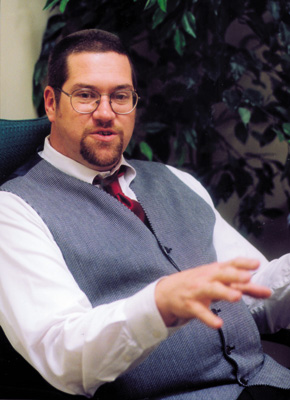
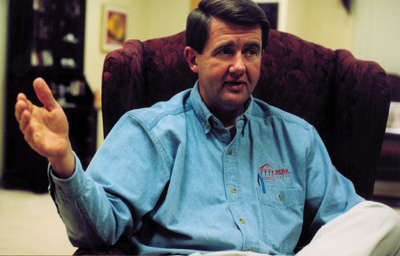
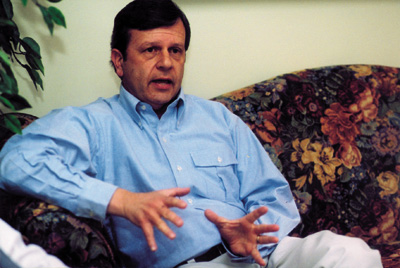
| The 1990's have seen the American stock markets hit record after record, even as they have become more volatile and confusing to many average investors. Is it possible to understand what is going on with the markets . . . and why? We recently visited with three Union University professors who teach in the areas of finance and economics - Howard Newell, Walton Padelford, and Kenny Holt - and they offered their own insights to aid in better understanding the markets in the 90's and beyond. Their conversation was moderated by Michael Duduit, Executive Vice President at Union. |