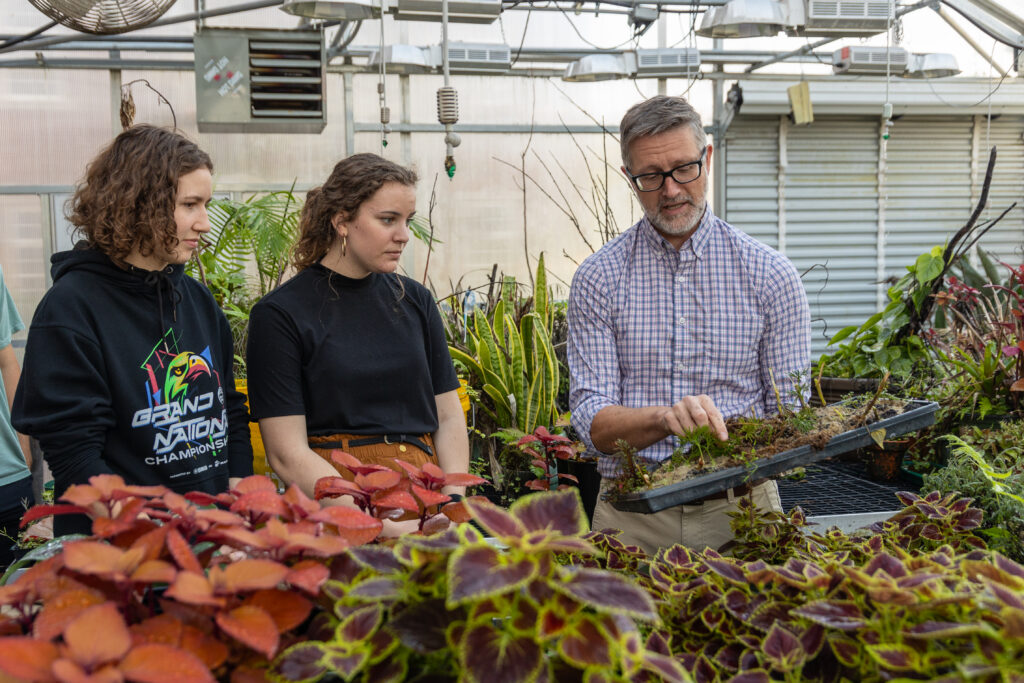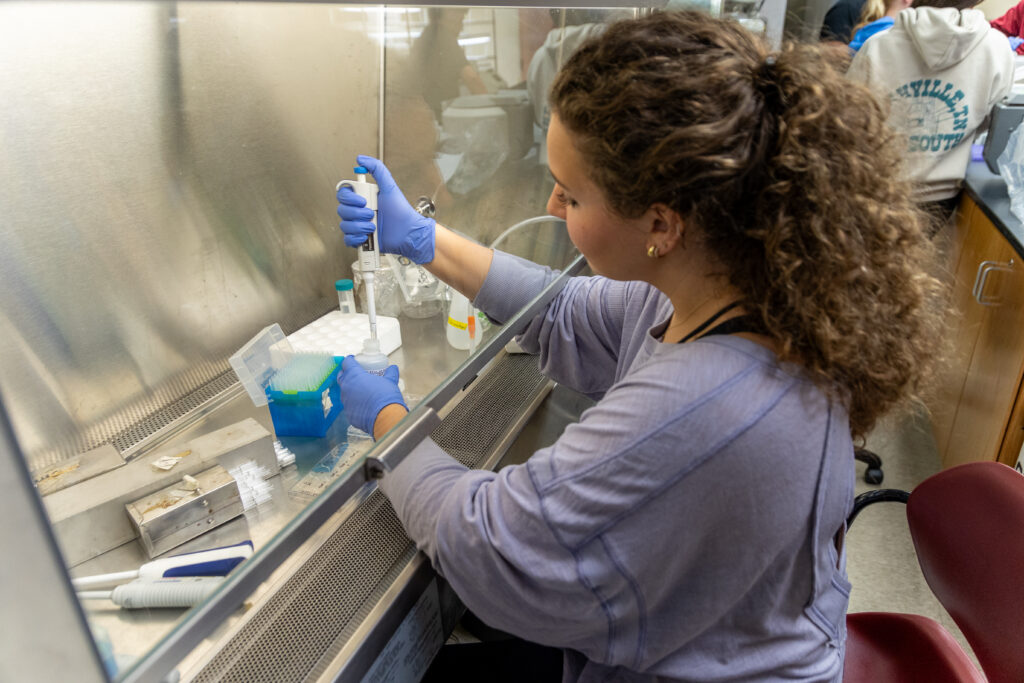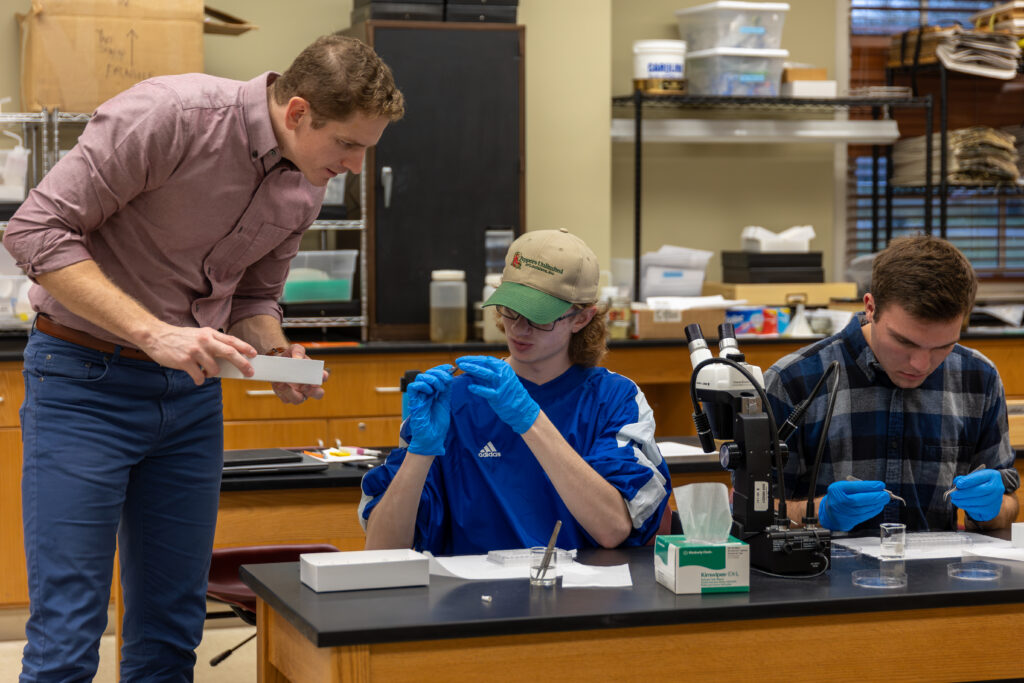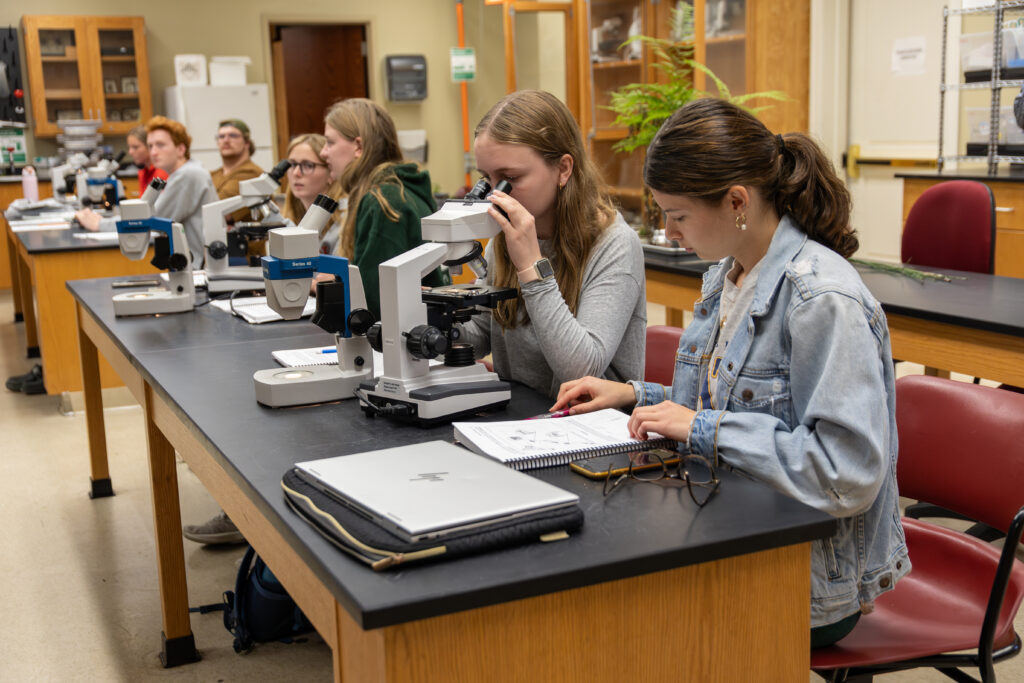
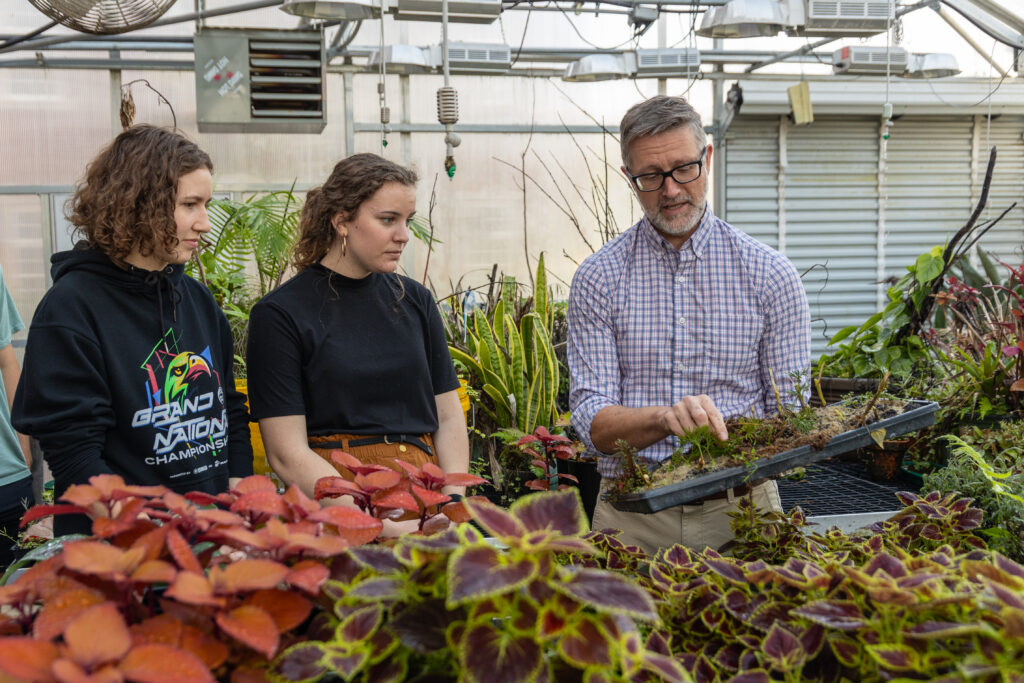
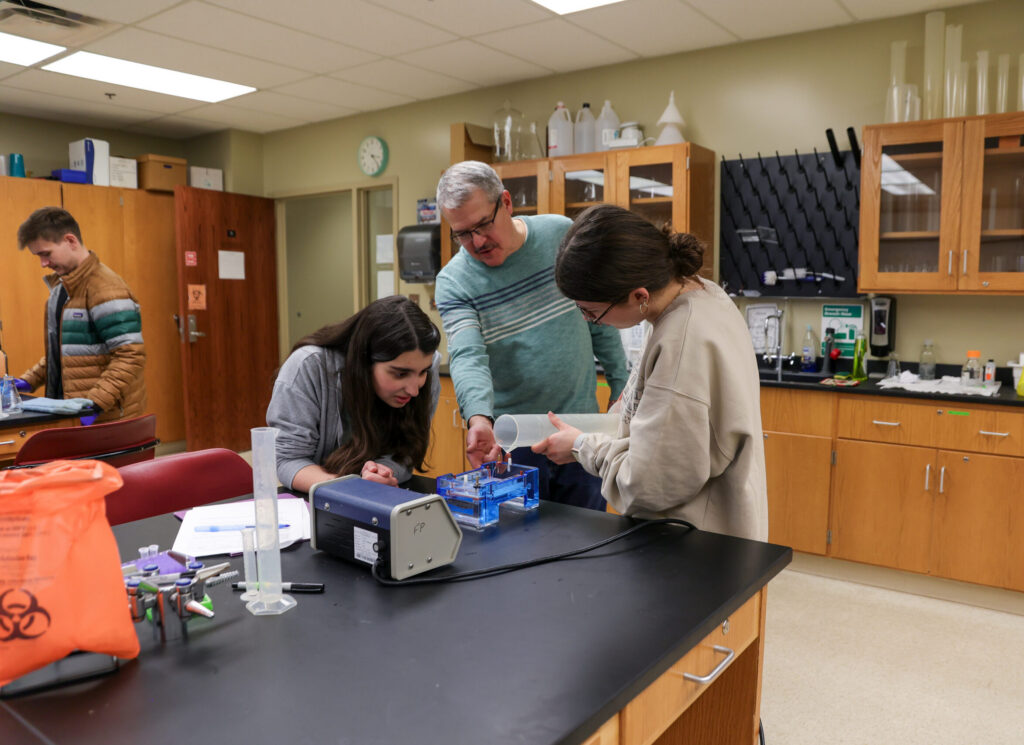
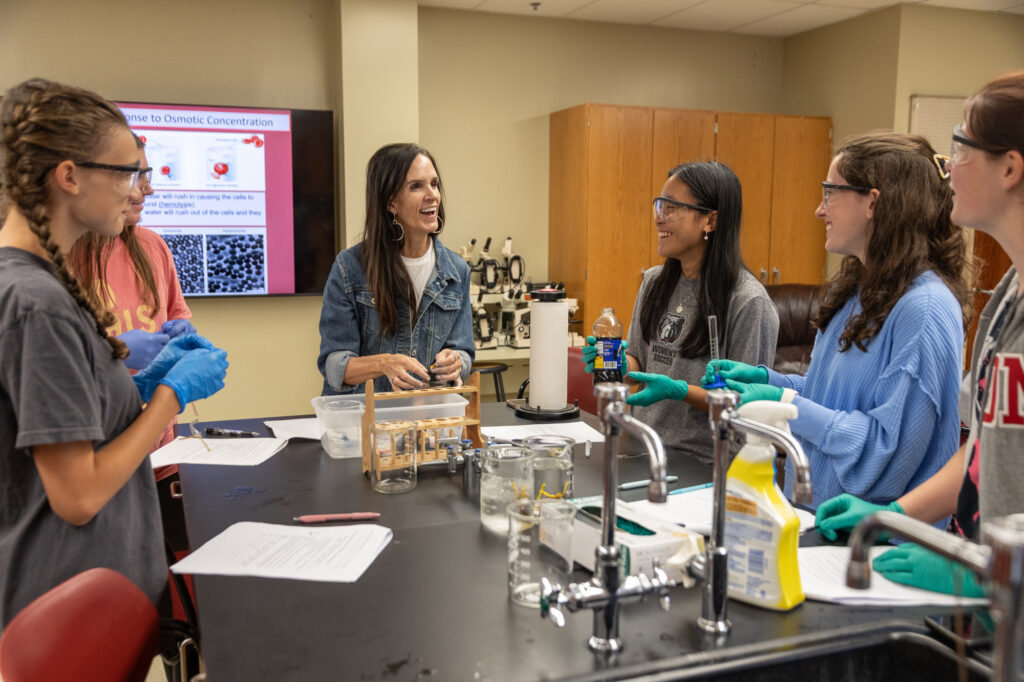
The curriculum in biology is designed to acquaint students with living organisms as whole, functioning entities that, in their diversity, share many common features. In addition to providing the scientific background required of all educated citizens, the courses provide a foundation upon which the student may build a graduate program, undertake training in health-related professions, or prepare for secondary-level science teaching. Students also participate in independent research projects. READ MORE
Because contemporary biology leans heavily on mathematics and physical sciences, students majoring in biology should include mathematics and chemistry in the freshman year. In the beginning course BIO 112, students will build a foundation for study of biological processes. Students can proceed to the first 200-level biology course during the second semester of the freshman year. In the sophomore year, students will continue the survey of the kingdoms of life by taking additional 200-level biology courses. Students should strengthen their understanding of mathematics and obtain a background in organic chemistry during that year. Biology courses at the 300-400 level, as well as our research sequence, should be taken during the junior and senior years, with seminar reserved for the senior year. Students will examine in detail how organisms function, and interact with their environment and each other. Biology majors are encouraged to minor in chemistry.
Upper-level students may enroll in marine biology, ecological, and behavioral courses by cooperative agreement with the Gulf Coast Research Laboratory and Au Sable Institute of Environmental Studies. For information, see the Department Chair.
General Biology as a concentration is for those interested in a broad perspective of the various biology fields. The electives allow students to focus on areas of interest. An excellent option for those training to be high school biology teachers, this concentration is also a good choice for those interested in other biology career paths as well. Required courses are microbiology, vertebrate and invertebrate zoology, botany, and genetics, along with four other 300-level biology electives.
Zoology is the branch of life science that focuses on the structure, function, behavior, and development of animals. The field continues to be an exciting one as new discoveries on how animals function and interact are being made all the time. For those with a passion for animals, we recommend this option. Required courses are vertebrate and invertebrate zoology, wildlife biology or microbiology, physiology, and five 300-level biology electives.
Cell Biology, an excellent option for those considering future study in medical fields, delves into the molecular intricacies of cells and tissues. Cell Biology as a concentration has the most structured course plan; required classes are microbiology, vertebrate zoology or botany, genetics, developmental biology, immunology, cell biology, molecular biology, and two of physiology, ecotoxicology, and advanced human anatomy and physiology I and II. A minor in chemistry, including biochemistry I and II, is also required.
We are pleased to offer a new major in Cell and Molecular Biology. With the impact of biotechnology and molecular biology on many areas of health care, including medicine, pharmacy (particularly through the area of pharmacogenomics), dentistry, optometry, and veterinary medicine, this major provides a great background for students interested in these fields. Students may also be interested in pursuing graduate studies in Cell and Molecular Biology, following in the footsteps of recent Union alums Hunter Steppe (Georgetown University), Hannah Henson and Brandon Lowe (University of Tennessee Health Sciences Center in Memphis), who are each pursuing PhD degrees. Because of our interest in integrating faith and science, students also have the opportunity to discuss the ethical impacts of these cutting edge advances with Union faculty and staff. New courses available as part of this major include Special Topics in Cell and Molecular Biology, taught with a different emphasis each time, including Cancer Biology, Signal Transduction, Cell-Cell communication and others, as well as Medical Parasitology. Students also take important Chemistry courses for this area, and this major does not require a minor.
The foundation of the Conservation Biology major at Union University is that we are God’s stewards of His creation. Conservation Biology is a science that examines the natural world around us, looking at the big picture of the inner workings of the environment and our impact on it. It is built on the assumption that humans can affect the environment positively and negatively. Conservation Biology majors learn about our natural world and the plants and animals that surround us by getting out into the fields, forests, and streams. They learn about the policies and laws that drive natural resources management in the United States and about conservation practices that can enhance wildlife and plant communities. Conservation Biology majors at Union University should expect to have the opportunity to enjoy the great outdoors, where several classes will take you into the field for hands-on experiences.
Please see the Academic Catalogue description for more detail. Some minors do not appear here.
Advisor: Mrs. Tamara Popplewell
The four main purposes of BIOME are (1) to provide a group for students with similar interests and struggles to network, develop friendships, receive accountability, and fun, (2) to provide an atmosphere in which students and faculty can relate outside of the classroom, (3) to create a professional organization through which students can develop better leadership skills and become better prepared for professional schools and the future, and (4) to attain a greater appreciation of our Creator, Jesus Christ. Each of these purposes is attained through our monthly meetings and events.
BIOME events are aimed at strengthening student fellowship, scholarship, and teacher-student relations. These events range from shaving cream softball and pizza parties to seminars from university professors to community service opportunities.
Large |
X-Large |
Large |
X-Large |
Large |
X-Large |
Large |
X-Large |