
United in Spirit. Grounded in Truth. Success Stories
In late 2015, Union University adopted its strategic plan, UNITED IN SPIRIT. GROUNDED IN TRUTH. to guide the university’s work over a five-year period. Due to the challenges imposed by COVID-19, university trustees extended the plan through 2022 to give university leaders more time to accomplish objectives and consider strategies for the future. Even still, we celebrate all that God has done, and we commit to pressing on as we continue to pursue these themes in the years ahead.
UNITED IN SPIRIT. GROUNDED IN TRUTH. emphasizes seven strategic themes: bearing witness to the transforming power of the gospel of Jesus Christ, expanding enrollment across the university, enhancing operational effectiveness and efficiency to advance the mission, revising the liberal arts core curriculum, supporting meaningful research among faculty and students, developing leaders for the future, and bolstering student life and building community.
This publication tells some of the success stories from the seven themes the university has been pursuing since 2016. Building on the university’s strengths and its core values of being excellence-driven, Christ-centered, people-focused and future-directed, the plan’s strategies and accompanying goals have enabled Union to pursue ongoing distinctiveness in its academic programs, constantly seeking after the ultimate embodiment of truth: Jesus Christ.
Strategic Themes
- Bearing Witness to the Transforming Power of the Gospel of Jesus Christ
- Expanding Enrollment Across the University
- Enhancing Operational Effectiveness and Efficiency to Advance the Mission
- Revising the Liberal Arts Core Curriculum
- Supporting Meaningful Research Among Faculty and Students
- Developing Leaders for the Future
- Bolstering Student Life and Building Community
1. Bearing Witness to the Transforming Power of the Gospel of Jesus Christ
As debate about the nature of religious liberty continues to rage in American society, Union University has taken a leading position in defending Americans’ rights to freely exercise their religious convictions.
These public stands taken by the university are a testimony to the institution’s convictions. As a Christ-centered school, Union remains fully committed to the first theme from its UNITED IN SPIRIT. GROUNDED IN TRUTH. strategic plan: “Bearing Witness to the Transforming Power of the Gospel of Jesus Christ.”
“Union has been faithful in its mission,” President Samuel W. “Dub” Oliver said. “It hasn’t drifted in its mission. Standing for religious liberty is one of the ways that we can demonstrate that. We have convictions, but we also have the courage of our convictions.”
The first case in which was Union involved stemmed from Obamacare, when the U.S. Department of Health and Human Services required that employers provide abortifacients in their prescription drug coverage plans. Union filed a lawsuit in 2014 challenging that mandate.
Additional Accomplishments
- The Office of University Ministries shifted Life Groups, Union’s upperclassmen-led small group ministry for new students, to more of a discipleship-focused ministry. The priorities of the ministry are to help new students understand the gospel, connect to a local church and take the next step in their walk with Christ.
- Journey Groups were implemented in the spring of 2019. Journey Groups are student-led discipleship groups that meet together to read through Scripture and live out the Christian life together. The 12 groups and 145 participants in 2019 studied the Gospel of John together. The groups were suspended for 2020-21 due to COVID-19.
- A new Christian leadership program for male students began in 2018. Called Men’s Leadership Training: Developing Disciples, Building Men, Training Leaders, the yearlong program is based on curriculum written by University Ministries and is open to all male students.
In 2017, after being dealt a defeat by the Supreme Court in a case involving the Little Sisters of the Poor, the government agreed to settle the lawsuit with Union and other institutions that had filed similar suits. The government paid Union’s legal expenses and agreed never to attempt enforcing such a mandate on Union again.
“When we brought that suit, it felt in many ways like a ‘David vs. Goliath’- type suit,” Oliver said. “We were doing it not to score political points, but to defend religious liberty, not just for us, but for everyone. That’s why it’s important for us, both as Southern Baptists and as Christians, to stand up for religious liberty in our country.”
Since that case, Union has not been involved directly as a litigant, but has participated in several amicus briefs in other cases pertaining to religious liberty, such as Our Lady of Guadalupe School v. Agnes-Morrissey-Berru, Sharonell Fulton v. City of Philadelphia and Bostick v. Clayton County, Georgia. Those cases, some of which are still pending, address such issues as the freedom of institutions to hire employees who share their religious beliefs and whether religious institutions have the same access to federal grants as every other organization.
For Hunter Baker, dean of Union’s College of Arts and Sciences, Union’s stance on these issues is crucial to preserving constitutionally-protected freedoms.
“One of the most important Baptist contributions to American society has been their insistence of the importance of religious liberty,” Baker said. “More than almost anyone, Baptists believed that conscience should remain uncoerced to the greatest extent possible. Union’s involvement in these landmark cases testifies to the consistency of Baptist conviction in this regard and to the continuing validity of preserving religious liberty.
“In an era when government grows to touch virtually every area of life, religious liberty has become more rather than less compelling as a priority for Christians.”
Oliver said while many Christian institutions have shied away from such controversies over fear of potential repercussions, Union has done the exact opposite and been clear about what it believes.
“What we’ve said at Union is that we want to be distinctive,” Oliver said. “We want to be faithful. We want to be people who aren’t ashamed of the gospel.”
2. Expanding Enrollment Across the University
Since the Memphis College of Urban and Theological Studies became part of Union University in 2019, MCUTS student Lee Smith says he has seen the impact in his own life psychologically, intellectually and theologically.
When Smith heard about the merger, he did his own research into Union University. He looked into the quality of Union alumni and liked what he found. From a psychological standpoint, Smith said, the merger was a boost to his studies.
“These people are people of integrity, and they are looking over my shoulder,” Smith said. “And it encourages me to keep on pushing forward.”
Additional Accomplishments
- The Office of Undergraduate Admissions conducted a thorough review of its campus visit program, which helped lead to an increase of prospective student visitors by 52%.
- Several new academic programs across the university were designed to attract more students. These programs include such majors as cybersecurity, commercial music, forensic science and criminal justice. Also, the university launched a new degree program for adult students, the Bachelor of Science in Christian Leadership.
- Through a partnership between several offices on campus, the relationships with alumni and local churches have improved. University ministries, advancement and undergraduate admissions worked with the Tennessee Baptist Mission Board to access the TBMB database of churches, which has been a valuable resource to promote various events on campus.
Founded in 2000 through a cooperative effort from several Memphis nonprofit organizations and churches, the former Memphis Center for Urban and Theological Studies existed to provide affordable, accessible and accredited theological education and career-oriented degrees for those serving in an urban context to transform Memphis and the Mid-South for the kingdom of Christ.
Upon its merger with Union, MCUTS became the Memphis College for Urban and Theological Studies, an academic unit of the university, with its students becoming Union University students. That helped Union fulfill the second goal from its UNITED IN SPIRIT. GROUNDED IN TRUTH. strategic plan — expanding enrollment across the university.
Smith, who serves as pastor of Greater Experience Community Church, a church plant in Horn Lake, Mississippi, will graduate from Union in May 2021 with his degree from MCUTS. He has made the president’s list and the dean’s list during his time as a Union student, accomplishments that were thrilling to him.
Upon his graduation, Smith plans to enter Union’s Master of Christian Studies program to continue his academic training.
Academically and intellectually, Smith said MCUTS has taken a step forward since becoming part of Union. An “A” in a class now is much more challenging than it was previously. And theologically, Smith has benefited immensely from such instructors as Mark Catlin, assistant professor of biblical studies, and Eric Smith, a Union alumnus and West Tennessee pastor who is an adjunct professor.
“They have caused me to really dig deep into the Scriptures, which is what I am looking for,” Smith said.
Smith has been able to “meet” a host of thinkers from Christian history — such as Polycarp, Tertullian, Martin Luther and John Calvin — through the teaching of these Union professors.
“They have allowed me to grow by introducing me to people that I know that I wouldn’t have met, if it wasn’t for Union,” Smith said. “The people that I’m talking about, these are dead people, but yet their blood still speaks.”
3. Enhancing Operational Effectiveness and Efficiency to Advance the Mission
Though Union University has operated a campus in Hendersonville since 2008, it never truly had its own building — until a major donation from Jim Ayers in 2019. Now, the building that has housed Union’s campus since 2012 is owned completely by the university.
“I’ve always been interested in formal education,” Ayers said. “I truly believe the pathway to a better standard of living is through more formal education.”
When Union University Hendersonville began in 2008, its campus was housed at First Baptist Church in Hendersonville. That campus moved to its current location on Indian Lake Boulevard in 2012, when construction was completed on a 24,000-square-foot building that was owned and developed by Ayers Asset Management.
Additional Accomplishments
- Over the past five years, the university increased total net assets by 26%, from $132.3 million to $166.2 million. This included reducing the university’s debt and capital lease obligations by 56%, from $44 million to $19.5 million.
- During the years of the strategic plan, Union’s endowment has grown by 35%, to $48.9 million on Dec. 31, 2020. The endowment consists of individual scholarship funds, endowed chairs and lectureships and an undesignated endowment account.
- Union trustees in 2019 adopted a campus master plan that provides an aspirational vision of what the campus can look like over the next 20 years. The plan proposes an extension of the Great Lawn from Pleasant Plains to Highway 45 Bypass, with a new chapel anchoring the eastern end of the Great Lawn.
Ayers, a native of Parsons, Tennessee, and founder of FirstBank, has been a longtime Union supporter and benefactor. His mother attended Union for a while, and her two sisters are Union graduates. He was one of the main engines that fueled the development of the university’s Great Lawn in the early 2000s. Jennings Hall is named after Ayers’ grandparents, William and Laura Jennings.
He also has given generously to scholarships for Union students over the years. When the 2008 tornado hit the Union campus, Ayers helped purchase replacement items for students and made a major contribution to the rebuilding effort. The Ayers Quad bears his name.
Union had been leasing its Hendersonville building from Ayers since its construction, until Union President Samuel W. “Dub” Oliver visited Ayers in 2019 and made a large request.
“Jim, we’d like for you to consider gifting that building to Union,” Oliver told Ayers.
Oliver didn’t have to spend a lot of time cajoling and convincing Ayers.
“Well, Dub,” Ayers replied. “I have always had that in the back of my mind.”
Ayers said he originally planned to leave Union the building in his will, and he knew the university could use the money it was paying him for other things. The request from Oliver just sped up the timetable.
4. Revising the Liberal Arts Core Curriculum
Based on their work in the last six months, the core revision task team members fully expect to have the UNITED IN SPIRIT. GROUNDED IN TRUTH. Strategic Plan’s fourth theme, “Revising the Liberal Arts Core Curriculum,” completed on time.
The core revision task team, composed of faculty from disciplines across the university, was formed in 2017. Jacob Shatzer, associate dean for the School of Theology and Missions and assistant provost, joined the team as the STM representative in September 2020 after Ben Mitchell, former Graves Professor of Moral Philosophy, retired from Union. Shatzer serves as chair of the committee.
The team had focused on gathering research and wisdom from numerous sources, such as looking at peer institutions, the significance of the liberal arts and interviewing different departments at Union. Before the team members took a brief hiatus when the COVID-19 pandemic hit, they had come to a consensus on the mission and vision for why Union has a core, what a core should be and what it should address, Shatzer said. Since the late summer of 2020, they have been working from that document.
Additional Accomplishments
- The core revision task team developed a revised timeline that should allow the greater faculty to approve a new core before the conclusion of the strategic plan at the end of 2022.
- The task team provisionally approved a complete prototype of the general core and assigned smaller working groups to flesh out the course descriptions and objectives for courses within this core. This rough draft includes two new multi-disciplinary courses and several existing courses with redefined course content, pedagogy or learning outcomes.
“A lot of people, when they hear ‘core revision,’ they think you need a new list of classes that are in the core,” Shatzer said. “To do that, there’s a ton of work that has to be done, so I had the benefit of coming in to begin leading the group after they had spent three years doing a lot of that good work.”
Shatzer said his role has primarily been facilitating and setting goals, getting the team to the point where it was able to put a proposal before the faculty on March 1.
Part of the team’s work is helping students realize that the core is not just a checklist of classes, but something that makes sense together, and helping them understand why they need to go through the core. In addition, the team wants to help professors think differently about the courses they teach in the core as not just contributing to their discipline, but to teach them in a way that serves the broader purpose of the core.
As a Christian liberal arts institution, Shatzer said, Union believes there is substance to what it means to be human — it is not something that individuals invent, but that God has created.
“What we want to do with the core is provide that baseline sense of what it means to be a human in the eyes of God and in relationship with God, not just in a sense of every class being a Bible class, but the Bible being part of that,” he said. “We think that being human actually means something, and the students need discipleship in what it means.”
Shatzer said it is meaningful for him as a 2007 Union alumnus to have the responsibility of helping lead this team and do something that is important for the mission of the university. God used Union significantly in his life, he said, so it is a joy to be used by God at Union in the lives of others.
The biggest takeaway Shatzer has gained from the process is that Union is blessed with great faculty.
“I’ve just grown to love and respect even more the faculty who are on the core revision task team,” he said. “It’s not because we agree all the time — it’s a hard thing to revise a core curriculum. At every moment, I’m glad I’m in the boat with these people. I’m hopeful that will be the same feeling that we have as the process moves to the greater faculty.”
5. Supporting Meaningful Research Among Faculty and Students
He may be a chemist working in a high-tech lab, but for Blake Watkins in Union University’s College of Pharmacy, his research can be described in a simple way.
His lab is a kitchen, and he’s a chef. He just doesn’t eat what he makes.
“You watch people who are passionate about food, and it’s all about creating something new using the same old ingredients,” says Watkins, Professor and Chair of Pharmaceutical Sciences. “And that’s really what we do. We’re not in the business of inventing ingredients. We just use the same ingredients that have been available for a long time.
Additional Accomplishments
- The number of faculty members receiving professional development grants has increased 46.5%, from 71 in 2015 to 104 in 2020.
- The university has appointed a task team of faculty, staff and students to develop award criteria and selection processes that will recognize outstanding research by a faculty member and a student. The awards were debuted to the campus community at a town hall meeting in September 2020 and were presented during Awards Day in May 2021.
- The annual Scholarship Symposium continues to be a significant event that highlights and celebrates student scholarship. Though the 17th annual event had to change significantly in the spring of 2020 because of COVID-19, a review of the research presented demonstrated significant and meaningful research across Union’s academic units.
“But when you use them in different amounts, under different conditions, you get a different outcome,” he explains. “That’s what we’re excited about, because that’s where the potential is.”
Since joining the Union faculty in 2008, Watkins has conducted cutting-edge drug discovery research in Providence Hall that has led to three patents — one already secured, and two others that are still undergoing review. His goal is to discover new or re-purposed molecules to treat diseases that currently don’t have adequate cures or treatments. This is exactly the university’s goal in supporting meaningful research among faculty and students.
His first patent, awarded in 2017, was for potential uses of molecules that are similar to a molecule produced by the fire ant. Watkins collaborated on this research with faculty members from the Emory College of Medicine and the Mercer College of Pharmacy, both in Atlanta.
Watkins and his colleagues discovered that these molecules, produced by the fire ant, prevent tumors from developing their own blood supply — which can greatly limit tumor growth. Watkins and his team synthesized compounds that are analogs of the fire ant molecule to see if they could increase the molecule’s benefits.
The second patent, filed in the spring of 2020, was done in collaboration with personnel from Emory and Mercer as well as Howard University. Watkins and his colleagues synthesized compounds based on computer-generated models that the Mercer scientists developed. The molecules proved to be effective against an enzyme that the body produces naturally — but one that is produced at higher levels during certain types of chronic illnesses, such as diabetes or other cardiovascular diseases. This heightened activity hastens damage to vessel walls.
Regulating the behavior of that enzyme, Watkins said, would be a pharmacological route to minimizing long-term damages to the cardiovascular system and the kidneys from some chronic diseases.
The third patent, filed in the fall of 2019, is the one Watkins is most excited about, because it involves research done entirely at Union. This project involves completely new chemistry that produces drug-like compounds faster and much less expensively by taking readily available materials and converting them into different classes of molecules with drug-like properties to target a variety of diseases, in a single chemical step. When granted, this will be Union’s first patent.
Watkins grew up in West Tennessee and attended Union as an undergraduate student. He originally planned to study medicine and become a surgeon. But Charles Baldwin, who was the longtime chairman of Union’s chemistry department, recognized Watkins’ potential for research and steered him in that direction.
“I think that’s one of the beauties of Union,” Watkins says. “We were small enough that even as chair of the department, he knew me well enough to recognize talents that I had not developed an appreciation for nor knowledge of at the time. I am grateful that I followed his advice and his guidance.”
After completing his graduate study at the University of Georgia and postdoctoral work at the University of Mississippi, Watkins returned to his alma mater. He is grateful for the opportunity to pursue research that interests him and that has the potential to benefit others, and he enjoys investing in and mentoring students. “I want my students to understand the value of chemistry, because if you look at it, God has really given us a very unique way of looking at his creation,” he says. “I mean, we’re really looking inside his creation if you will, at the very inner workings of what he has placed on this earth for us to explore. We have the ability, because of the understanding he’s given us, to tell two atoms to bond to one another or not to bond to one another and in the process develop something that can alleviate suffering. That’s pretty powerful.”
6. Developing Leaders for the Future
The Leadership Union program is developing current and emerging leaders in faculty and staff across the university in support of the UNITED IN SPIRIT. GROUNDED IN TRUTH. Strategic Plan’s sixth theme, “developing leaders for the future.”
Leadership Union is in its fifth year. Approximately 40 faculty and staff have “graduated” from the program, and 13 people are in the current cohort.
Samuel W. “Dub” Oliver, president of Union University, started the initiative and asked the human resources department to take the lead. John Carbonell, associate vice president for human resources, was on the original task force to create the program. He is also chair (along with co-chair Michele Atkins, professor of education and assistant provost for accreditation and research) of the current committee of faculty and staff who run the program, which is made up of graduates from each cohort.
Additional Accomplishments
- Union University rewards faculty and staff in recognition of outstanding performance or service through annual faculty and staff awards, as well as funding for professional development.
- One of the many ways that Union achieves the goal to expand opportunities for students to develop leadership skills is through Leadership Union Student Edition, which was launched in the fall of 2020 with 11 students. Other various leadership programs, panels and discussions are offered yearly through the Office of Student Life and the Office of University Ministries.
- Union’s commitment to providing leadership development opportunities for students has been validated for the last five years by The National Survey of Student Engagement Frequencies and Statistical Comparison Report. According to the biennial reports, more than 60% of Union seniors acknowledge that they have held a formal leadership position in a student group or organization during their time in college, which is 30% higher than other participating universities and 20% higher than Union’s peer institutions.
Although many business leadership programs already exist, Carbonell said they wanted Union’s program to be different because of its Christian perspective. The mission of Leadership Union is to develop current and potential university leaders for a lifestyle of leadership based on biblical principles and practices that inspire others for effective and efficient work in support of Union’s overall mission.
Nan Thomas, former associate director of faculty development who retired in 2020, was on the original task force and helped oversee the program for four years. Carbonell said she was influential in forming the program and its direction.
Thomas said they see leadership development as a discipleship issue: “For Union, the reason we created the vision statement is that’s really what we wanted to see happen in people’s lives — that as they went through this program, they would become the kind of people who would lead, and in their leading, love God more and love others more.”
The program is for both faculty and staff members who are selected by Union’s Executive Council. Leadership Union spans a full academic year and consists of monthly professional training sessions, a mentor program and a team project.
The training sessions cover topics such as communication, diversity, handling conflict and decision-making. The team projects over the years have included painting and updating the fountain area outside of the Penick Academic Complex, offering a no-phone day on campus and installing a large concrete cross outside of the chapel. The purpose of the projects is to build leadership skills, Thomas said: “It’s much more about ‘How is leadership evolving in the project efforts?’ as opposed to ‘What did they complete?’ or ‘What did they contribute?'”
The committee has also built in participant feedback for each session as well as at the end of the program. This allows the committee to continually adjust the program to better suit the participants’ needs.
Carbonell said Oliver’s promotion of the program and recognition of graduates, as well as the projects cohorts have completed, have helped create an awareness that Union cares about growing leaders.
“People have seen their peers and seen people from all different levels, faculty and staff, in the program,” Carbonell said. “I’m hoping that it sends the message that we care about building leaders and that we’re intentional about it.”
Many graduates of the program have advanced in their careers at Union, and several have gone on to leadership positions at other organizations, he said. The program has also received positive feedback from participants on their personal leadership growth, Thomas added.
7. Bolstering Student Life and Building Community
Union’s new Faculty-in- Residence program is carrying out the UNITED IN SPIRIT. GROUNDED IN TRUTH. strategic plan’s seventh theme, “Bolstering Student Life and Building Community.”
The Faculty-in-Residence program started in the fall of 2019 with two faculty members and their families: Frank Anderson, the Stephen Olford Chair of Expository Preaching, and his wife, Vernetta, coordinator for the Center for Academic Success; and Jason Crawford, associate professor of English, and his wife, Chelsy, and their two (now three) children. In the spring of 2021, Phil Davignon, chair and associate professor of sociology, and his family moved onto campus and became the third family in the cohort.
Additional Accomplishments
- The sub-points and associated benchmarks of Strategic Theme Seven have largely been achieved. However, the work of Bolstering Student Life and Building Community is not simply an item to be checked off a list, but rather something to be built upon on and enhanced each academic year.
- Over the course of the strategic plan, programs have been evaluated and honed, new programs and spaces have been added, and cross-departmental/
institutional relationships have been strengthened. These improvements have benefited the student experience and continue to heighten the university’s ability to accomplish its mission. - The extension of the strategic plan through 2022 provides the opportunity for further adaptation and enrichment. Over the next two years, the division of Student Life will intentionally focus on evaluating and improving campus facilities to promote, cultivate and build community; and encouraging and equipping faculty and staff to build healthy relationships with students and colleagues.
The program is a three-year commitment for faculty to live on Union’s campus with the vision of bridging the gap between residence life and academic life.
“Residence life is great at building community, and academic life is really good at academics, but our mission is really to bring community and academics together so that the things we’re talking about in class actually play out in the place where students live, and the conversations we’re having in class spill over into the place where students live,” Crawford said.
To achieve that goal, the Anderson and Crawford families connect with students in numerous structured and unstructured ways. They host several formal events such as the Fireside Forum series, where they invite students to listen to a topical conversation with a faculty guest, and Common Table, where they have recruited a group of 16 students who meet weekly with the Faculty-in-Residence families, either in a large group or in smaller groups, for a meal and discussion about community.
Although the COVID-19 pandemic has presented challenges, Anderson and Crawford have thought of creative ways to connect with students. For instance, Crawford added a fire pit and picnic table outside his residence so his family can spend time with students outside safely.
“Practices really matter for us,” Crawford said. “The practice of gathering and eating together, the practice of having conversation together, bringing students into our homes, letting them see how we live with our families. Those kinds of things are really important to what we’re doing.”
Anderson said he appreciates praying together with students and the “give-and-take” discipleship relationship between himself and the students.
“We think in terms of discipling others and walking with them as they are growing in their relationship with Christ,” he said. “Interestingly, the more we do that and the better we do it, the more we find them able to disciple us, maybe in a greater way than we’ve even been able to do so with them.”
Interacting with students in his home has also presented opportunities for himself and students to engage in the work of racial reconciliation, Anderson added.
By living in such close contact with students, seeing the rhythm of their daily lives and having the students see his family’s life, Crawford said he has a heart connection with the students that he did not have before.
“We really hope that it’ll just become part of the campus culture that faculty members are here, and that what we’re doing is not just a job or a class, but it’s a way of life,” Crawford said. “We can invite them into a life spent pursuing wisdom and trying to live wisely and not just think wisely, and it’s that living aspect that’s really the magic of this program.”
Continue Reading
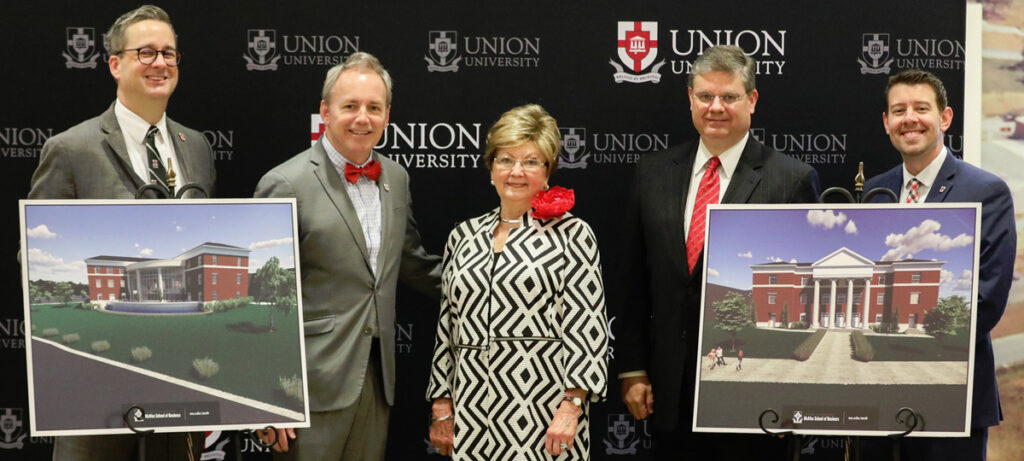
Union to add new academic building on university’s Great Lawn
Union to add new academic building on university’s Great Lawn

Beth Madison: Reliance on God while dealing with chronic illness
Beth Madison: Reliance on God while dealing with chronic illness
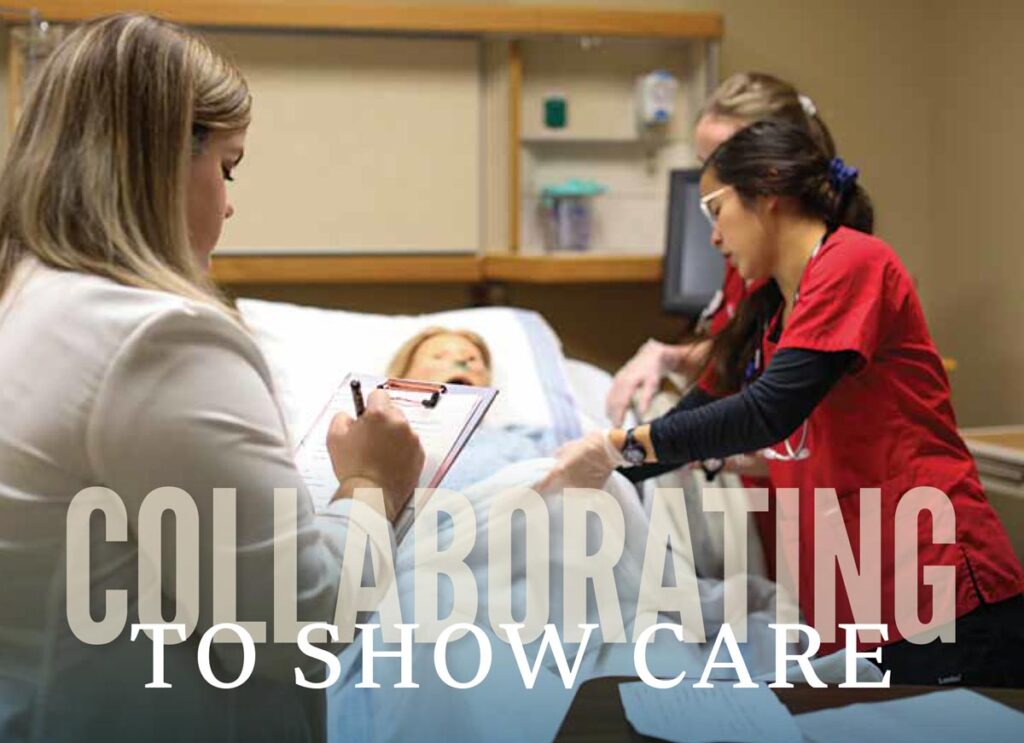
Collaborating to Show Care: IPE simulations demonstrate the value of teamwork
Collaborating to Show Care: IPE simulations demonstrate the value of teamwork